Let me kick off with something that should not ever be unclear in this business: gambling is never a financial plan, and it won’t fix personal problems. It’s costly amusement, plain and simple, and like any entertainment that involves risk, it requires clear boundaries. At bonus ohne einzahlung Betride Casino, the player protection system I encounter rests on a structure of mandatory tools, voluntary limits, and cooling-off mechanisms embedded within the registered user account. What I’ll go over here is how those protections function in practice, what legal obligations define them, and how a player can leverage them to keep control before a session ever turns into trouble. This is the infrastructure supporting the bonuses and the game library, and it deserves the same scrutiny before anyone does a first deposit.
Deposit Restrictions and the Variation Between Per-Day, Weekly, and Monthly Limits
I have to differentiate what the law requires and what an operator offers voluntarily, because the difference impacts how fast a limit change takes effect. Under the German treaty, the cross-operator monthly default cap of €1,000 is the standard, but Betride Casino also allows me to set individual limits that are tighter and function on shorter cycles. A daily deposit limit I set at, for example, €30 will prevent further deposits within that 24-hour window once the threshold is met, irrespective of how much of the monthly allowance remains unused. If I raise a limit, the platform is legally required to apply a seven-day cooling-off period before the increase becomes active. This asymmetry is deliberate: lowering a limit takes immediate effect; raising it creates friction. I regard this the single most protective structural design in the entire system, because it eliminates the ability to overrule a rational decision made in a calm state with an impulsive request made during a chase. The deposit controls extend to both card and e-wallet channels, meaning no payment method avoids the aggregate calculation.
Irreversible Self-Exclusion and the OASIS Interlock System
I now need to cover the most robust and most binding protection mechanism available: the permanent self-exclusion that links to the national OASIS blocking database. Under the German regulatory model, when I apply for a permanent exclusion at Betride Casino, the operator is required by law to record the exclusion in the nationwide central system, which kurier.at then stops that player from using any other licensed German-facing online casino or sportsbook. I am unable to remove this block for a minimum period established by regulation, usually at least one year, and reactivation is never automatic; it necessitates a formal, documented request after the minimum period has expired and is dependent on a waiting period. This is essentially different from a single-operator cool-off and embodies a structural firewall. I check whether the self-exclusion page explicitly explains that the exclusion applies across all brands using the OASIS interconnect and that seeking to enroll with a different operator during the exclusion period will result in an automatic block, not a welcome bonus. The weight of this step is precisely why the explanation must be comprehensive and clear, and why I regard it a benchmark for serious commitment to player protection.
The Purpose of Licensed Payment Methods in Implementing Transaction Controls
Player protection goes beyond a frontend interface; it’s integrated in the payment infrastructure. Betride Casino provides a range of German-market standard methods that I can check when I visit the cashier section, typically including direct bank transfer via Sofort or similar gateways, major credit and debit cards, and regulated e-wallets such as PayPal, Skrill, or Neteller. What counts for safety doesn’t hinge on the logo list but the integration. A properly licensed casino won’t process withdrawals back to a method that is different from the deposit source unless that method has passed the same identity verification, and the transaction logs are unified under the player ID so that limit counters operate across channels. Processing times for withdrawals at a compliant operator usually range from instant for certain e-wallets to two to three banking days for bank transfers, provided the KYC documentation has been submitted and verified. I always advise a player to complete document verification immediately after registration, not at the point of a first withdrawal request, because the deliberate delay that verification introduces at that emotional moment can serve as an unplanned protective pause.
The Rules That Oversee Player Safety in Germany
I cannot discuss what Betride Casino provides without first situating it in the German regulatory environment, because the safety features are not optional promotional additions. Germany’s Fourth Interstate Treaty on Gambling (Glücksspielstaatsvertrag 2021) implemented a unified federal framework that ensured player protection legally enforceable. For a brand operating under a German-facing licence, the obligations include a mandatory monthly deposit limit of €1,000 across all licensed platforms save when an individual operator applies successfully for a raised limit after enhanced due diligence. The operator is also required to enforce a five-second minimum spin interval on slots, curb autoplay functions, and ban progressive jackpots from escalating in ways that promote rapid chase cycles. I need to stress that these are not internal policies; they’re statutory requirements that shape every technical decision behind the scenes. When I assess Betride Casino’s compliance, I’m verifying whether these mandatory ceilings and interrupts are visibly active, not just vaguely mentioned in a terms document.
Self-Assessment Tests and Activity Record as Preventative Tools
One tangible asset I look for in the responsible gambling section is a structured self-assessment questionnaire, and Betride Casino provides one that maps to common compulsive play detection measures. Usually, this includes a series of yes or no questions: I have often caught myself dwelling on gambling during work or family time; I have borrowed money or sold possessions to gamble; I have attempted to recover losses rapidly; I have become frustrated when aiming to limit. The result is not a medical assessment, but the result categorises the pattern into a low-risk, moderate-concern, or high-concern band with straightforward connections to external counselling bodies. Independently, the account history tool is a real-time ledger that I can export or view as a visual timeline, showing net deposits, withdrawals, session lengths, and game-by-game results over a specified interval. When I open this once a month and confront the cumulative figure rather than just the memory of the previous session, the data can function as a remedy for selective recall. The mix of introspective evaluation and concrete transaction data is more valuable than each component individually.
How the Panic Button and Session Reality Checks Function Technically
One of the most underappreciated safety features I review is the immediate self-exclusion trigger, often called as a panic button, and the paired session reality check. At Betride Casino, the reality check is a timed pop-up alert that interrupts active gameplay at a frequency the player selects during registration or inside the account settings. The pop-up isn’t a gentle suggestion; it blocks the client temporarily, presents the net position of the session so far (total stakes, total returns, time elapsed), and requires a conscious click to resume or to exit. The panic button works adjacent to this. It’s a prominently placed icon, accessible without navigating through menus, that activates a minimum 24-hour cooling-off lock the moment it’s pressed. Two things count here: the lock cannot be reversed by customer support during that window, and the button’s placement is fixed, not buried inside a responsible gaming subpage. For a player who notices an emotional escalation mid-session, that physical proximity weighs far more than a written policy.
Third-Party Help Resources and Their Integration to the In-Platform Features
No casino-run system can substitute for independent professional help, and I will be straightforward about the organizations that Betride Casino guides players toward. In the German-language context, the primary referral is to the Bundeszentrale für gesundheitliche Aufklärung (BZgA), which runs a dedicated gambling addiction portal with a free, anonymous telephone and chat counselling service. The platform may also refer to Gambling Therapy, a multilingual online support service working across time zones, or to local state-specific addiction help directories. The integration I look for is whether these links are present not only in a static footer but also contextually: inside the reality-check overlay, on the panic-button confirmation screen, and in the automated emails activated when a player establishes a new loss limit or starts a cooling-off period. That contextual placement matters because a player who encounters a self-exclusion trigger is often in a moment of heightened receptivity to an external hand-off. I also check whether the operator provides a direct facility to request a permanent account closure, distinct from a temporary time-out, and whether that permanent closure simultaneously triggers a notification to the central German player-blocking registry (OASIS).
The way the Game Library and Slot Architecture Show the Low-Risk Mandate
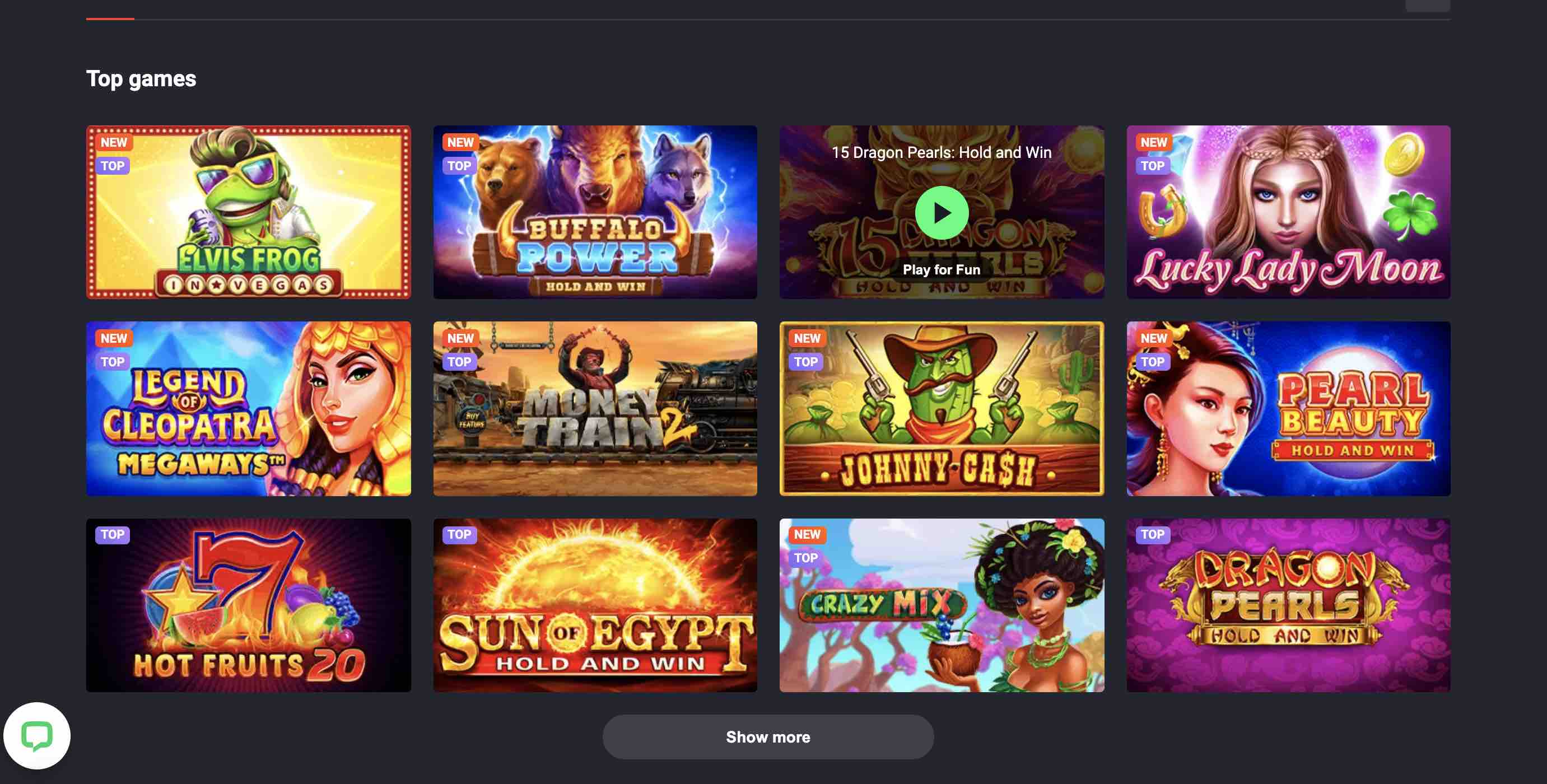
I wish to move beyond abstract policy language and look at what a player actually sees inside the lobby, because design choices here reflect compliance under the surface. The game inventory at Betride Casino is hardly a random aggregation; it’s filtered through the German licence requirements. Slots from studios like NetEnt, Play’n GO, and Pragmatic Play undergo configuration adjustments for the German market, most visibly the removal of autoplay and the enforcement of the five-second spin lock. I also notice that loss-limit displays and session timers are often integrated into the game interface or at least accessible through a persistent side panel rather than reachable only via a separate responsible gaming menu. Outside of slots, table games such as multiple blackjack variants, European and French roulette, and baccarat operate with standard rulesets, but the lobby usually contains clear labelling of volatility or RTP ranges, which helps me make an informed selection rather than a purely aesthetic one. A live dealer section, if present, runs on feeds from Evolution or Pragmatic Play Live and similarly must adhere to the same deposit-limit framework, meaning a player cannot circumvent the €1,000 cap by switching from slots to live roulette within the same operator.
How the Overall User Experience, Mobile Design, and Support Infrastructure Promote Safer Play
Safety features work effectively if a player can find and operate them without hassle, so I examine how the account tools adapt across devices. At Betride Casino, the responsible gambling dashboard isn’t locked to a desktop layout; the same limit-setting panels, reality-check configurations, and self-exclusion triggers are accessible through a collapsible menu on the mobile browser version. The mobile experience depends on responsive HTML5, meaning no downloadable app is needed to access the full safety suite. The support channel becomes important here because some limit adjustments or closure requests may require direct assistance. The platform typically offers live chat and email support during extended hours, and I assume the support agents to be prepared to handle a self-exclusion request without deflection, upselling, or retention scripting. A single interaction where an agent suggests “taking a break instead” rather than processing a permanent closure request can reverse pages of written policy, so I prioritize operators that maintain a recorded, audit-ready protocol for such high-sensitivity contacts. The combination of device-independent tool access, trained support, and the legal backstop of the OASIS register forms a stratified safety architecture rather than a single-point solution.
- Establish deposit limits promptly after registration, with smaller amounts than the allowed maximum, and understand that decreasing a limit takes effect right away while elevating it triggers a seven-day wait.
- Use the reality check timer set to a interval that suits your usual attention span, usually 30 or 45 minutes, not the preset 60 minutes.
- Finalize identity verification ahead of you accumulate a large balance you might want to withdraw, reducing friction at a moment of potential stress.
- Examine the account history page at a regular interval, for example the first of every month, and observe the net position rather than just the last session’s outcome.
- Bookmark the external counselling resources offered in the responsible gaming section prior to you ever believe you need them, so the path is previously known.
What I aim to convey is a understanding that responsible gambling infrastructure is not a given guarantee. The tools I have detailed, from the hard limits mandated by the German regulatory treaty to the voluntary controls inside the account dashboard and the irreversible OASIS exclusion pathway, are only beneficial when they are set up before they are required. Betride Casino supplies the technical architecture for that setup, but the act of placing a deposit cap, switching on a 30-minute reality check, or reviewing the self-assessment output lies with the player alone. My strongest counsel is to view the responsible gambling settings not as a afterthought to the welcome offer or the game lobby, but as the very first setup task after registration. Ten minutes invested to setting those parameters in a calm state will offer more for long-term safety than any reactive intervention ever could.



![Ninja Casino [Trustly login, no registration] - Free Spins Bonus!](https://sp-ao.shortpixel.ai/client/to_webp,q_lossy,ret_img,w_500,h_633/https://www.freespinsinfo.com/wp-content/uploads/2018/10/Ninja-Casino-screen-review.jpg)